Cancer and Fertility: What Every Patient Should Know Today
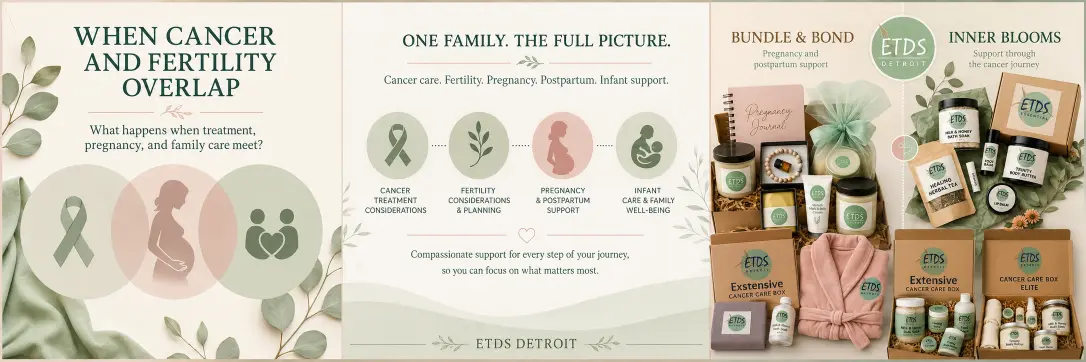
Chemotherapy, radiation, and hormone therapy can save lives and also affect fertility, sometimes without patients being counseled beforehand. Macmillan Cancer Support has extensive, clinically reviewed resources on exactly this overlap: fertility preservation, pregnancy during and after treatment, and the realities of postpartum recovery on top of cancer care. Bundle & Bond and Inner Blooms exist to hold that full picture for families navigating both.
What Does Cancer Treatment Actually Do to Your Fertility, and Why Does Almost Nobody Talk About It Before It's Too Late?
Chemotherapy. Radiation. Hormone therapy. These treatments save lives, and they can also quietly close doors that patients did not even know were open. Fertility loss during cancer treatment is one of the most underdiscussed topics in oncology care. Many patients are not counseled before treatment begins. Some are caught off guard postpartum by challenges they didn't expect, because treatment affected their body in ways nobody walked them through in advance. Macmillan Cancer Support names this overlap directly: cancer does not pause for pregnancy. Pregnancy does not pause for cancer. And the families navigating both deserve care that acknowledges the full picture. ETDS Detroit was built for exactly this intersection.
What Does Cancer Treatment Actually Do to Fertility?
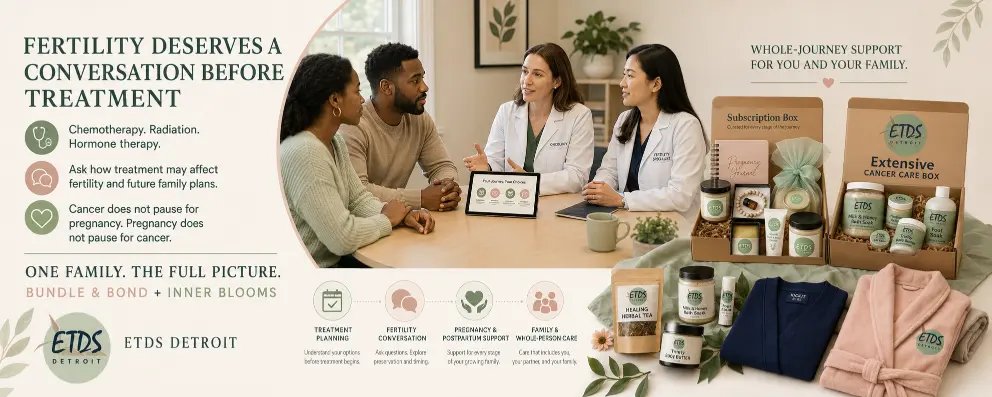
Chemotherapy can damage eggs or sperm, sometimes temporarily and sometimes permanently, depending on the specific drugs and doses used. Radiotherapy usually only affects fertility if the treatment area includes part of the reproductive system, though it can still have wider effects on hormones. Hormone therapy can suppress fertility during treatment, with effects that may or may not reverse afterward. According to Macmillan, doctors sometimes have options to reduce this risk, such as choosing a less damaging chemotherapy regimen or using protective medication during treatment, but these decisions typically need to happen before treatment starts. Explore Bundle & Bond
Why Are Patients Often Not Counseled About Fertility Before Treatment?
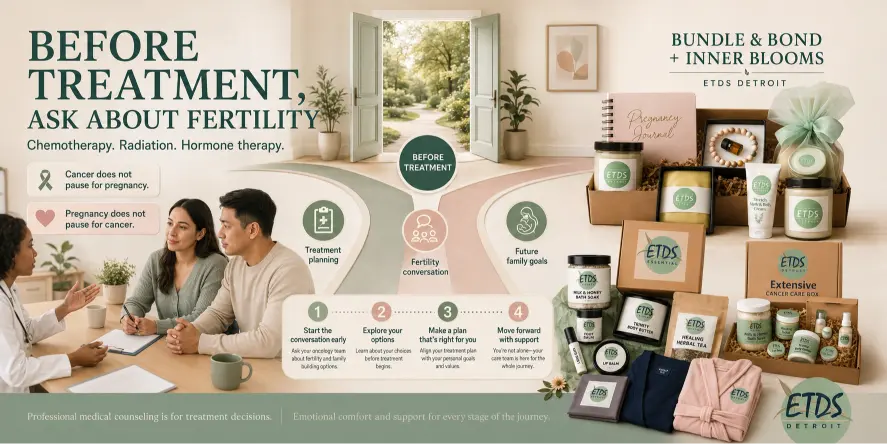
When a new cancer diagnosis arrives, the urgency of starting treatment can crowd out conversations that feel secondary in the moment, even when they aren't. Macmillan's guidance is direct on this point: if starting a pregnancy in the future matters to you, that conversation needs to happen with your cancer doctor early, before treatment begins, because some fertility-protecting options aren't available once treatment is underway.
What Happens When Pregnancy and Cancer Treatment Overlap?
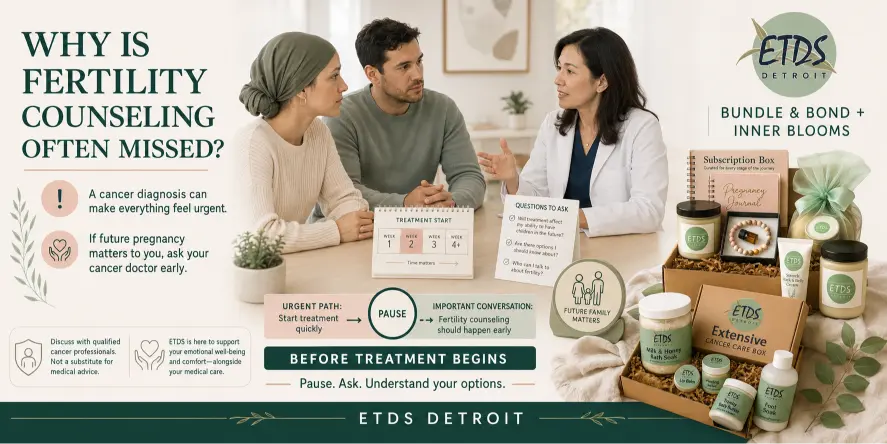
Being diagnosed with cancer while pregnant raises its own set of hard decisions. Macmillan's guidance notes that doctors generally aim to treat pregnant patients as close as possible to how they'd treat a non-pregnant patient with the same cancer type and stage, sometimes adjusting timing or specific drugs to help protect the pregnancy. These are deeply personal decisions that usually involve the patient's oncology team, family, and often a fertility specialist working together. Talk to our care team
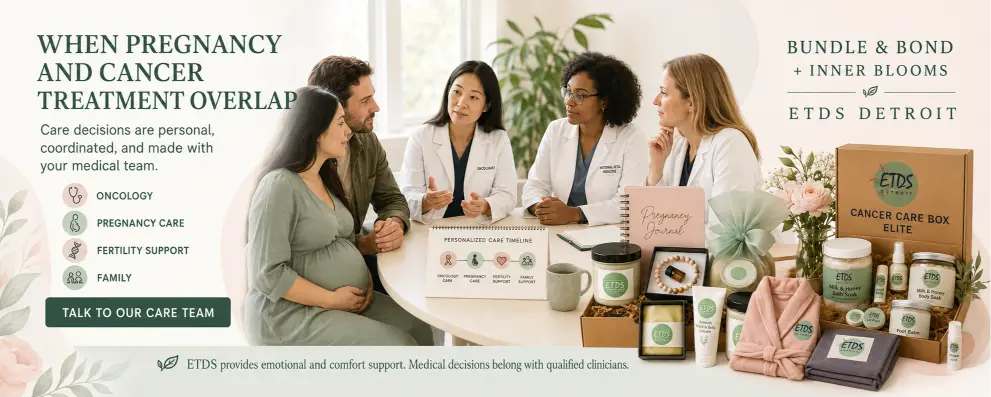
What Postpartum and Infant Care Challenges Can Follow Cancer Treatment?
Recovery doesn't stop at delivery. Patients navigating postpartum life after or during cancer treatment can face additional physical and emotional challenges on top of standard newborn care, from treatment side effects to changes in breastfeeding ability to the sheer exhaustion of recovering from two things at once. These challenges are rarely discussed together, which is exactly the gap this overlap creates.
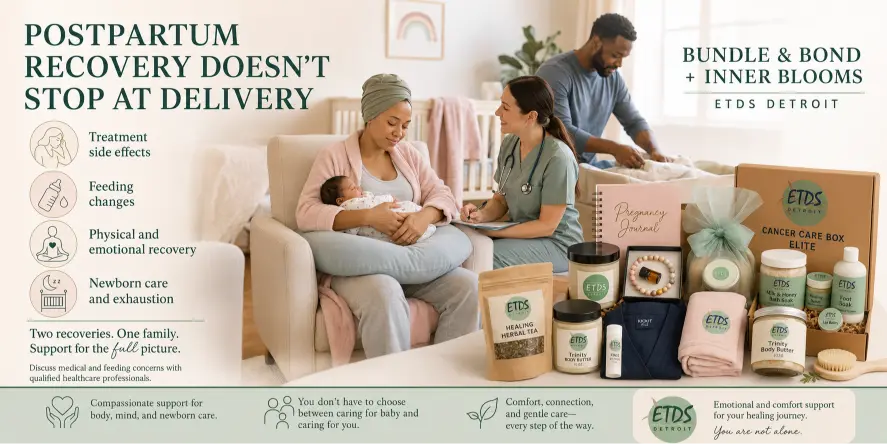
How Do Bundle & Bond and Inner Blooms Support Families Navigating Both?
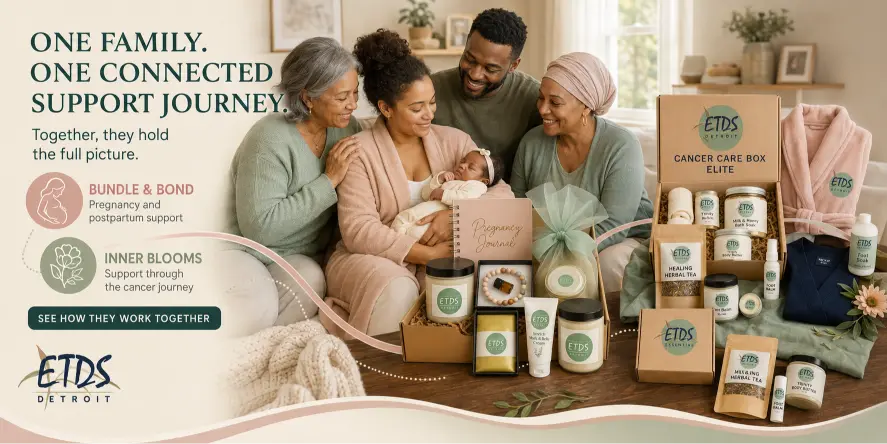
Bundle & Bond supports pregnancy and postpartum after cancer treatment. Inner Blooms supports the cancer journey itself. Together, they hold the full picture for families navigating both, rather than treating cancer care and family-building support as two separate conversations.
See how Bundle & Bond and Inner Blooms work together
Supporting Families Through Pregnancy and Cancer Together
Cancer does not pause for pregnancy. Pregnancy does not pause for cancer. Families navigating both deserve information before treatment starts, not after, and support that acknowledges the full picture rather than just one piece of it. That's the intersection where ETDS Detroit provides compassionate resources, thoughtfully curated care packages, and encouragement for every step of this unique journey.
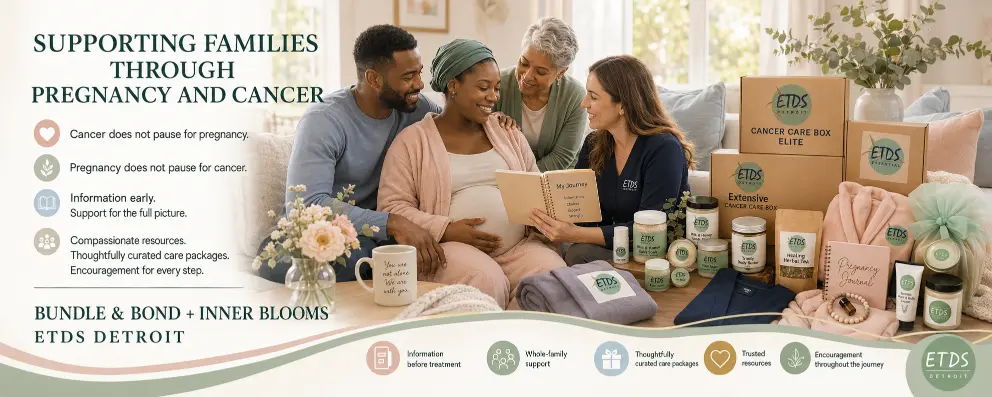
Explore Support from Bundle & Bond and Inner Blooms
Know someone who could benefit from this information? Share this article, then explore Bundle & Bond pregnancy care packages and Inner Blooms cancer care boxes to provide meaningful comfort and support throughout every stage of the journey.

Frequently Ask Questions
1. Does chemotherapy always cause infertility?
Not always. It depends on the specific drugs, doses, and the patient's age and reproductive health beforehand. Some patients recover fertility after treatment; others don't. A cancer doctor can talk through options such as protective medication or fertility preservation before treatment starts.
2. When should I talk to my doctor about fertility if I'm starting cancer treatment?
As early as possible, ideally before treatment begins, since some fertility-protecting options are no longer available once treatment is underway.
3. Can you be treated for cancer while pregnant?
Yes. Doctors generally aim to treat pregnant patients as similarly as possible to non-pregnant patients with the same cancer, sometimes adjusting timing or specific drugs to help protect the pregnancy.
4. What is Bundle & Bond, and how is it different from Inner Blooms?
Bundle & Bond supports pregnancy and postpartum, including after cancer treatment. Inner Blooms supports the cancer journey directly. Together they cover both sides of this overlap.
5. Where can I learn more about fertility and cancer treatment?
Macmillan Cancer Support has extensive, clinically reviewed resources at macmillan.org.uk, or reach out to our care team here.
6. What are your shipping details?
We ship nationwide using multiple delivery carriers, including UPS, USPS, FedEx, and others, so your care box arrives reliably no matter where you are. For more shipping or order questions, visit our FAQ page or contact us directly
KEY TAKEAWAYS
Chemotherapy, radiation, and hormone therapy can all affect fertility, sometimes temporarily and sometimes permanently.
Many patients are not counseled about fertility before treatment begins, even though early conversations matter most.
Pregnancy and cancer treatment can overlap, and doctors generally aim to treat pregnant patients as close as possible to standard care.
Postpartum recovery after or during cancer treatment can bring added physical and emotional challenges that are rarely discussed.
Bundle & Bond and Inner Blooms together support families navigating both cancer and pregnancy or postpartum recovery.