Black (in)Fertility Awareness Week: Why It Matters
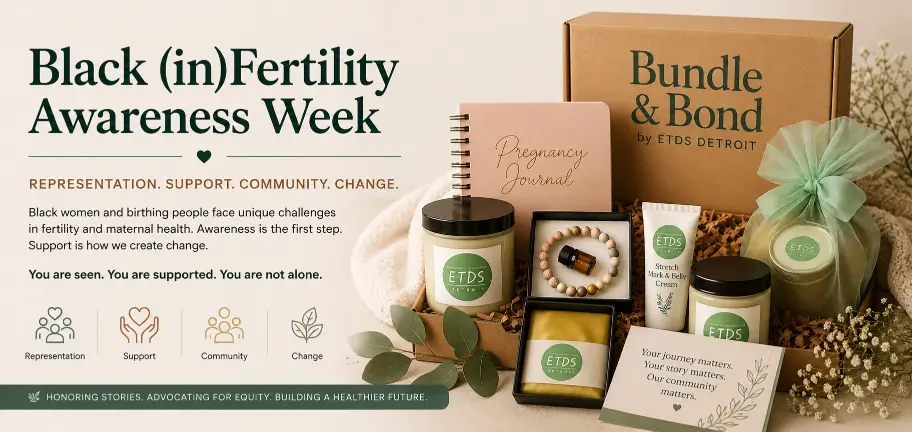
Black (in)Fertility Awareness Week (July 28–Aug 2) exists because Black women face measurably higher rates of infertility, lower access to treatment, and longer delays before seeking care, yet remain underrepresented in the broader fertility conversation. Bundle & Bond is built to support every family-building journey, including the ones that have been left out of that conversation for too long.
Black (in)Fertility Awareness Week: Why the Maternal Health Conversation Still Leaves Entire Communities Out
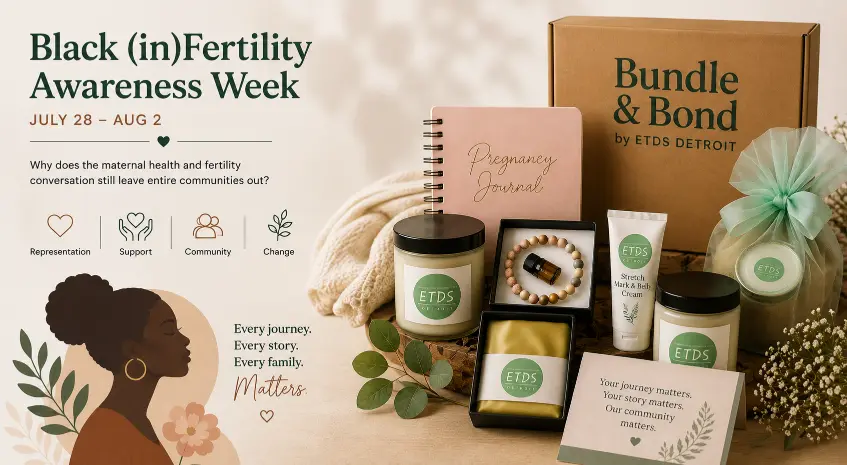
Why does the maternal health and fertility conversation still leave entire communities out?
Today kicks off Black (in)Fertility Awareness Week (July 28–Aug 2), a week dedicated to the Black community's unique experience with infertility and family building, often shaped by less access, less representation, and more silence. Detroit is home for us. So is the belief that every fertility journey, regardless of race, path, or how "visible" it is, deserves real, intentional support. This week, we're listening, learning, and showing up louder for the families being built in every direction.
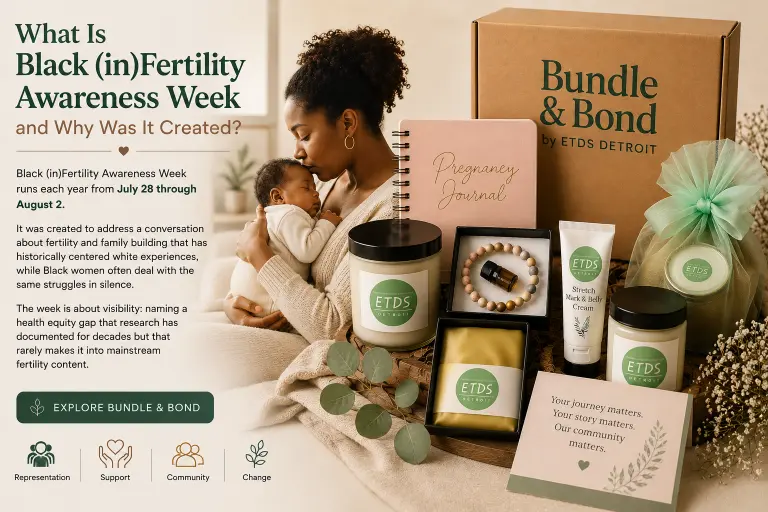
What Is Black (in)Fertility Awareness Week and Why Was It Created?
Black (in)Fertility Awareness Week runs each year from July 28 through August 2. It was created to address a conversation about fertility and family building that has historically centered white experiences, while Black women often deal with the same struggles in silence. The week is about visibility: naming a health equity gap that research has documented for decades but that rarely makes it into mainstream fertility content.
Why Are Infertility Rates and Outcomes So Different for Black Women?
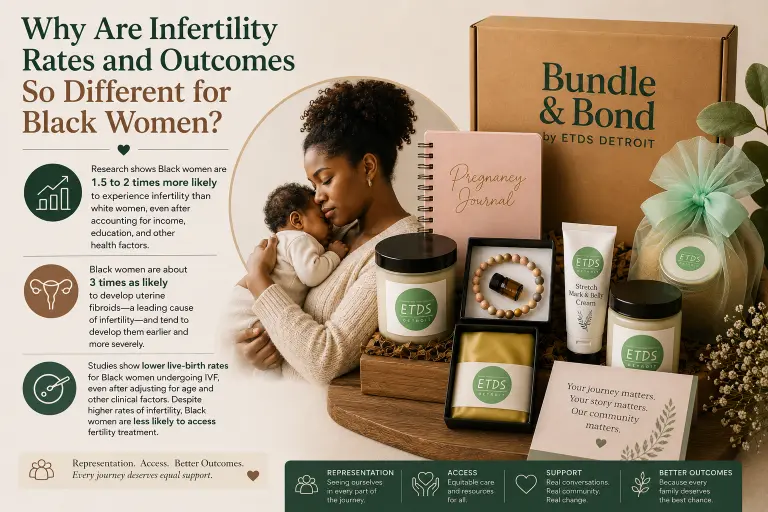
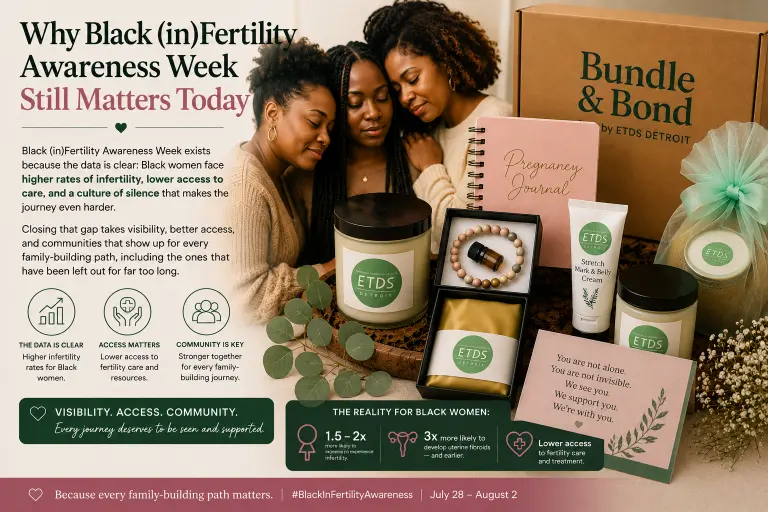
The data on this is consistent and long-standing. Research including the CARDIA Women's Study has found that Black women are roughly 1.5 to 2 times more likely to experience infertility than white women, even after accounting for income, education, and other health factors. Black women are also about three times as likely to develop uterine fibroids, a leading cause of infertility, and tend to develop them earlier and more severely. Access compounds the problem. Multiple studies tracking assisted reproductive technology outcomes have found lower live-birth rates for Black women undergoing IVF compared to white women, even after adjusting for age and other clinical factors. Despite facing infertility at higher rates, Black women are also less likely to access fertility treatment in the first place.
Why Do So Many Black Families Stay Silent About Infertility?
Part of the gap isn't medical; it's cultural. Long-standing myths about the "hyper-fertility" of Black women have made it harder for Black women experiencing infertility to feel believed, or to feel like their struggle is even possible. Research has found that Black women often wait significantly longer than white women before seeking fertility care, sometimes because they don't know anyone else who has gone through it, and sometimes because past experiences with the healthcare system have made it harder to trust that care will be taken seriously. That silence is exactly what awareness weeks like this one are trying to break.
What Would Real Support for Black Fertility Journeys Look Like?
Real support starts with believing people the first time they say something feels wrong, not waiting for a crisis. It means fertility clinics, employers, and communities treating access to care as an equity issue, not an individual failing. And on a personal level, it means friends and family creating space for these conversations instead of assuming everyone's path to parenthood looks the same. Share your perspective or tag an organization doing this work
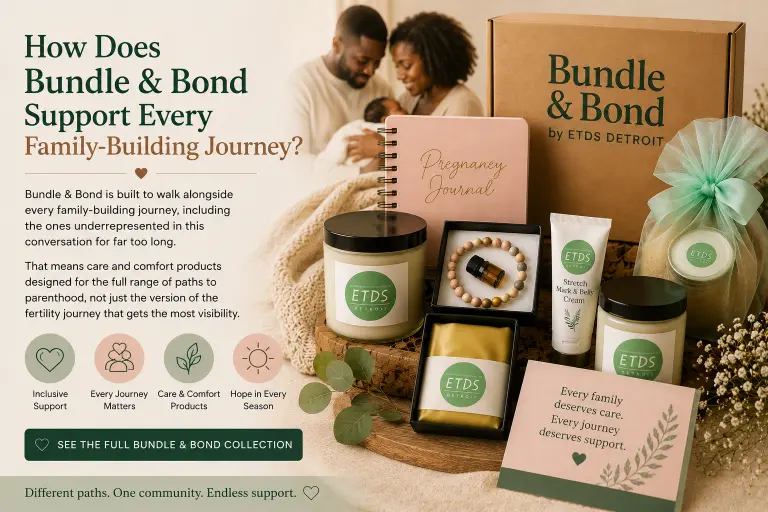
How Does Bundle & Bond Support Every Family-Building Journey?
Bundle & Bond is built to walk alongside every family-building journey, including the ones underrepresented in this conversation for far too long. That means care and comfort products designed for the full range of paths to parenthood, not just the version of the fertility journey that gets the most visibility. See the full Bundle & Bond collection
Why Black (in)Fertility Awareness Week Still Matters Today
Black (in)Fertility Awareness Week exists because the data is clear: Black women face higher rates of infertility, lower access to care, and a culture of silence that makes the journey even harder. Closing that gap takes visibility, better access, and communities that show up for every family-building path, including the ones that have been left out for too long.
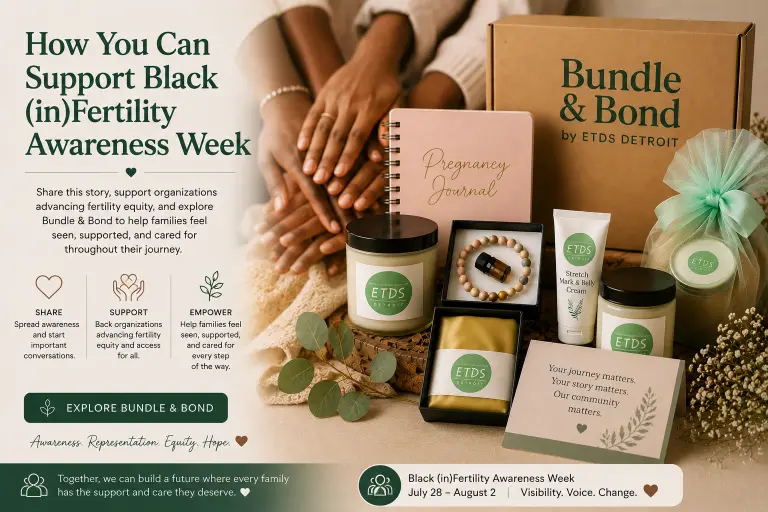
How You Can Support Black (in)Fertility Awareness Week
Share this story, support organizations advancing fertility equity, and explore Bundle & Bond to help families feel seen, supported, and cared for throughout their journey.
Frequently Ask Questions
1. What is Black (in)Fertility Awareness Week?
It's an annual awareness week, held July 28 through August 2, dedicated to the Black community's experience with infertility and family building, an experience often shaped by less access to care, less representation, and more silence than the broader fertility conversation.
2. Are Black women more likely to experience infertility?
Research, including the CARDIA Women's Study, has found Black women are roughly 1.5 to 2 times more likely to experience infertility than white women, even after adjusting for socioeconomic factors.
3. Why do Black women often wait longer to seek fertility care?
Studies point to a mix of factors: cultural myths about Black women's fertility, past experiences with the healthcare system, and simply not knowing others who've gone through similar struggles, all of which contribute to longer delays before seeking help.
4. What is Bundle & Bond?
Bundle & Bond is ETDS Detroit's family-building and pregnancy care line, designed to support every path to parenthood. See the full collection here.
5. How can I support this cause?
Share this post, tag an organization doing this work, or reach out to us directly here if you'd like to talk about how Bundle & Bond can support someone on their journey. General questions can also be found on our FAQ page.
KEY TAKEAWAYS
Black (in)Fertility Awareness Week runs July 28 through August 2 each year.
Black women are roughly 1.5 to 2 times more likely to experience infertility than white women, even after adjusting for socioeconomic factors.
Black women are about three times as likely to develop uterine fibroids, a leading cause of infertility.
Despite higher infertility rates, Black women are less likely to access fertility treatment and often wait longer to seek care.
Bundle & Bond is built to support every family-building journey, including the ones historically left out of the fertility conversation.